
SHARED SPACES
Who is responsible for the exhaust?
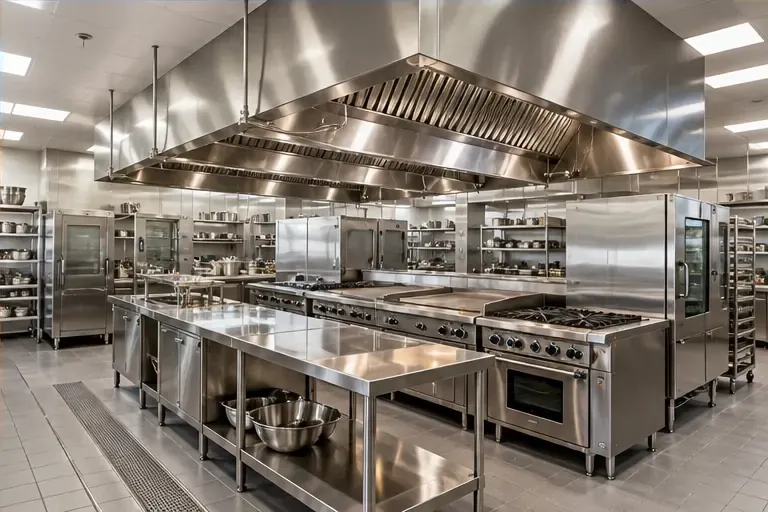
In a commissary or ghost kitchen, several food businesses cook under one roof. Sometimes each station has its own hood feeding a common duct. Sometimes a single long hood serves several tenants. Either way, one operator's cooking affects everyone's exhaust.
Start with the lease or membership agreement. It should say whether the facility owner or each tenant arranges and pays for hood, duct and fan cleaning. If it is silent, raise it before you request quotes.
KitchenGuard Pasadena is a marketing and referral website. We do not perform cleaning, inspection or repair. Independent providers do the work, set their own pricing and scope, and contract with you directly. Verify any license, insurance or certification your project requires before hiring.
HEAVY USE
High volume, long hours
Delivery-focused kitchens often run fryers, flat-tops and woks from late morning to late night, and food production lines may run in shifts. That is high-volume cooking, which sits on a tighter inspection schedule than a typical sit-down restaurant.
NEXT STEP
Send one clear request
Whether you are the facility owner or a tenant, say which you are, what your agreement makes you responsible for, and who else needs to be informed. See exhaust duct and fan cleaning and cleaning frequency and requirements.
FAQ
Common questions
Who pays for hood cleaning in a shared kitchen?
It depends on your lease or membership agreement. Some facilities include it in fees and others make tenants responsible for their own hoods.
Can one tenant clean only their own hood?
Sometimes, but if hoods share a duct and fan, cleaning one section leaves the rest. Talk to the facility owner about the whole system.
Do ghost kitchens need more frequent cleaning?
High-volume, long-hours cooking is generally on a tighter schedule. Confirm the interval with a qualified professional and the Pasadena Fire Department.
KEEP READING